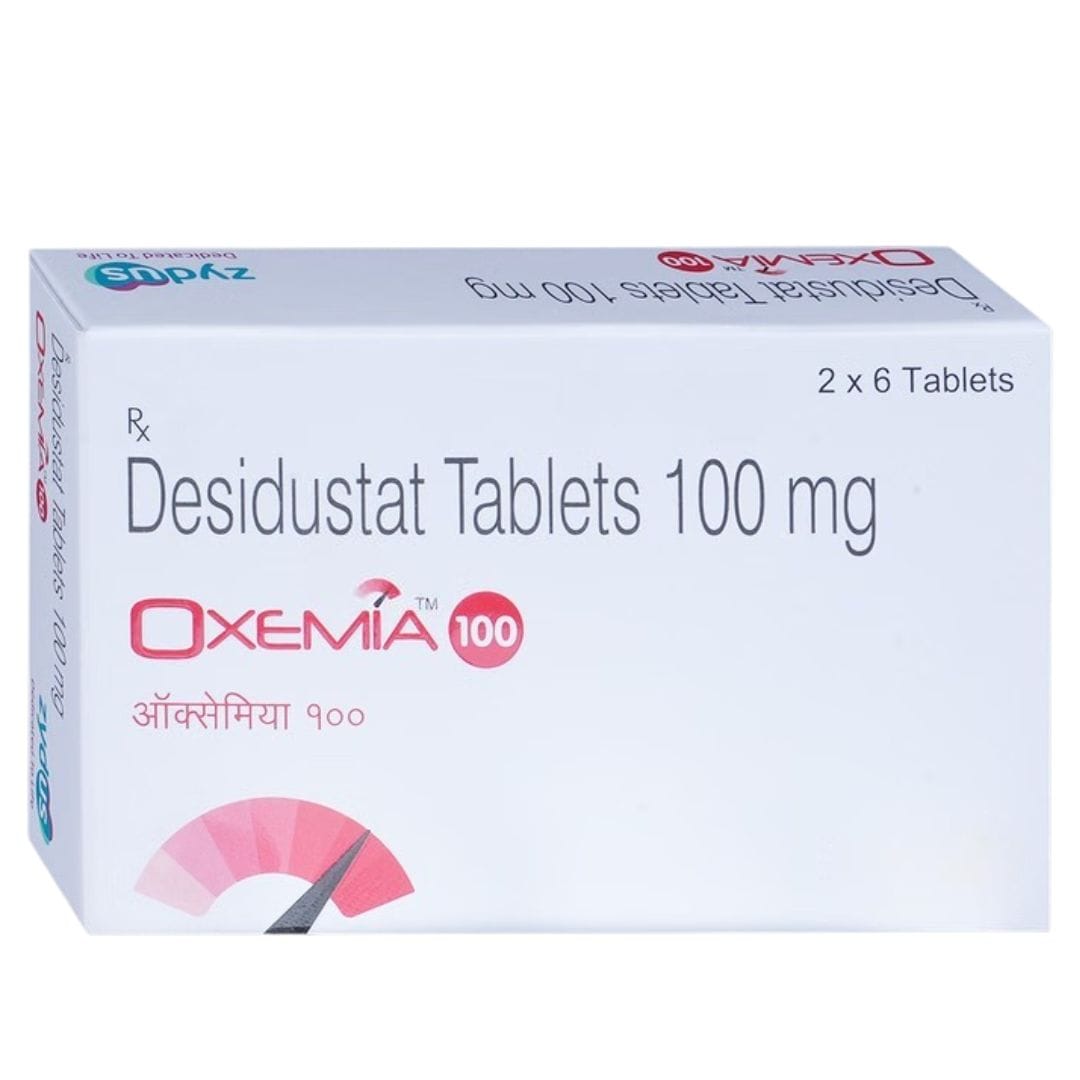
Oxemia 100 Tablet is a prescription-only, orally administered Hypoxia-Inducible Factor Prolyl Hydroxylase Inhibitor (HIF-PHI) containing Desidustat 100mg, manufactured by Zydus Lifesciences Ltd. (formerly Zydus Cadila) — one of India’s largest and most globally recognized pharmaceutical companies, headquartered in Ahmedabad, Gujarat.
Approved in India in March 2022, Desidustat was the first HIF-PHI to receive regulatory approval in India and represents a significant clinical advancement in the management of renal anaemia — the chronic, debilitating anaemia associated with Chronic Kidney Disease (CKD). Oxemia 100 Tablet is indicated for adult patients with CKD who are either on dialysis (DD-CKD) or not yet on dialysis (NDD-CKD), and provides a clinically validated, convenient oral alternative to the traditional injectable Erythropoiesis-Stimulating Agents (ESAs) such as epoetin alfa and darbepoetin alfa.
Anaemia Due to Chronic Kidney Disease (CKD)
Oxemia 100 Tablet is indicated for the treatment of anaemia caused by chronic kidney disease in adult patients. Anaemia is one of the most prevalent and serious complications of CKD, affecting over 50% of patients with advanced kidney disease and significantly increasing cardiovascular morbidity and mortality. In CKD, damaged kidneys lose their ability to produce sufficient erythropoietin — the hormone responsible for stimulating the bone marrow to produce red blood cells — resulting in chronically low haemoglobin levels, persistent fatigue, breathlessness, weakness, and severely reduced quality of life.
Dialysis-Dependent CKD (DD-CKD)
Oxemia 100 is approved and clinically validated for patients already receiving haemodialysis or peritoneal dialysis. Clinical trials demonstrated that Desidustat was non-inferior to epoetin alfa in dialysis-dependent CKD patients in increasing and maintaining haemoglobin levels to the target range.
Non-Dialysis-Dependent CKD (NDD-CKD)
Oxemia 100 is equally indicated for patients in earlier stages of CKD who are not yet on dialysis, offering effective anaemia management and potentially delaying the need for more invasive treatments. Clinical trials demonstrated that Desidustat was non-inferior to darbepoetin alfa in non-dialysis-dependent CKD patients in raising haemoglobin levels.
Desidustat works through a novel and scientifically precise mechanism that differs fundamentally from traditional ESA therapy:
Step 1 – HIF-alpha Stabilisation Under normal oxygen conditions, the body’s HIF-alpha (Hypoxia-Inducible Factor alpha) subunits are rapidly degraded by prolyl hydroxylase domain (PHD) enzymes. Desidustat inhibits these PHD enzymes, preventing the breakdown of HIF-alpha and causing it to accumulate — effectively mimicking a state of cellular hypoxia (low oxygen) even when systemic oxygen levels are normal.
Step 2 – HIF-Mediated Gene Transcription The stabilised HIF-alpha triggers the transcription of multiple genes involved in erythropoiesis, iron metabolism, and oxygen delivery — including the gene responsible for endogenous erythropoietin (EPO) production.
Step 3 – Increased Endogenous EPO Production Unlike ESAs which deliver synthetic erythropoietin from outside the body, Desidustat stimulates the body’s own organs — primarily the kidneys and liver — to produce EPO naturally. This physiological EPO rise stimulates the bone marrow to increase red blood cell production.
Step 4 – Improved Iron Absorption and Mobilisation Desidustat also suppresses hepatic hepcidin production — a key regulator of iron homeostasis. Lower hepcidin levels improve iron absorption from the gut, enhance iron release from tissue stores, and increase iron availability for red blood cell synthesis — reducing dependence on IV iron supplementation.
The combined result is a meaningful, sustained increase in haemoglobin levels, improved oxygen-carrying capacity, and significant reduction in the symptoms of renal anaemia.
Traditional injectable ESAs such as epoetin alfa and darbepoetin alfa have been the standard of care for renal anaemia for decades, but carry significant limitations. Oxemia 100 (Desidustat) addresses these limitations directly:
Dosing Schedule
Oxemia 100 Tablet is taken orally three times per week — not daily. Doses should be spaced at least one day apart, for example on Monday, Wednesday, and Friday. The starting dose and any dose adjustments must be individualised by your nephrologist or treating physician based on your current haemoglobin levels, target haemoglobin range, dialysis status, and response to treatment.
Step 1 – Take as Prescribed Swallow the tablet whole with a full glass of water. Oxemia 100 may be taken with or without food. Do not crush, break, or chew the tablet.
Step 2 – Timing with Phosphate Binders If you are taking phosphate binders such as sevelamer or lanthanum carbonate, take Oxemia 100 Tablet at least 2 hours before or 4 hours after your phosphate binder dose. Phosphate binders can significantly reduce the absorption of Desidustat if taken simultaneously.
Step 3 – Regular Haemoglobin Monitoring Your doctor will monitor your haemoglobin levels regularly throughout therapy to assess response and adjust the dose accordingly. Do not change your dose without consulting your doctor.
Step 4 – Missed Dose If a dose is missed, take it as soon as you remember on the same day. If it is the next day, skip the missed dose and resume your regular three-times-weekly schedule. Never take two doses on the same day.
Step 5 – Do Not Discontinue Without Medical Advice Do not stop taking Oxemia 100 Tablet without consulting your nephrologist. Sudden discontinuation may cause haemoglobin to drop and worsen anaemia symptoms.
Oxemia 100 Tablet is contraindicated in:
Use with caution and under close nephrological supervision in:
Inform your doctor and pharmacist of all medications, supplements, and herbal products you are currently taking. Key clinically relevant interactions include:
Phosphate binders (sevelamer, lanthanum carbonate): Can reduce Desidustat absorption significantly. Take Oxemia 100 at least 2 hours before or 4 hours after phosphate binder administration.
CYP2C8 inhibitors (gemfibrozil): Drugs that inhibit the CYP2C8 enzyme can increase Desidustat plasma levels, raising the risk of side effects. Close monitoring is required if these drugs are used concurrently.
CYP2C8 inducers (rifampicin): May reduce Desidustat plasma concentrations and reduce therapeutic effectiveness.
Anticoagulants (warfarin): Desidustat may affect the metabolism of warfarin. INR monitoring is recommended when initiating, adjusting, or stopping Desidustat in patients on anticoagulant therapy.
IV iron supplementation: As Desidustat improves iron absorption and mobilisation through hepcidin suppression, the dose of IV iron supplementation may need to be reviewed and adjusted during therapy.
Oxemia 100 Tablet is generally well tolerated in clinical trials of up to 24 weeks, with a safety profile broadly similar to ESAs. Side effects may include:
Seek immediate medical attention if you experience chest pain, shortness of breath, sudden worsening of blood pressure, unusual bleeding, or signs of a severe allergic reaction including swelling of the face, lips, tongue, or throat.
Store between 15 and 30 degrees Celsius, away from direct sunlight, heat, and moisture. Store in the original packaging. Keep out of reach of children. Do not use after the expiration date printed on the strip. Do not store in bathrooms or humid environments.
What is Oxemia 100 Tablet used for? Oxemia 100 Tablet (Desidustat 100mg) is used to treat anaemia caused by chronic kidney disease in adult patients — both those on dialysis and those not yet on dialysis. It works by stimulating the body’s natural production of erythropoietin through HIF pathway activation.
How is Oxemia 100 different from ESA injections? Oxemia 100 is taken orally three times a week — there are no injections required. It works by stimulating natural EPO production rather than delivering synthetic EPO, and it also improves iron availability by lowering hepcidin, which injectable ESAs do not address.
How often do I take Oxemia 100 Tablet? Three times per week, with at least one day between doses — for example Monday, Wednesday, and Friday. It is not taken daily.
Can I take Oxemia 100 with my phosphate binder? Not at the same time. Take Oxemia 100 at least 2 hours before or 4 hours after your phosphate binder to ensure full absorption.
How long does it take for Oxemia 100 to work? Haemoglobin levels typically begin to rise within the first 4 weeks of treatment. Your doctor will monitor your haemoglobin at regular intervals and adjust your dose based on your response.
Is Oxemia 100 approved outside India? Desidustat was approved in India in March 2022. It is currently under regulatory review in other markets. It is available for export and international purchase through licensed pharmaceutical suppliers.
Do you ship Oxemia 100 to USA, UK, and UAE? Yes. We provide discreet, secure international shipping to the United States, United Kingdom, UAE (Dubai, Abu Dhabi), Saudi Arabia, Australia, and India.
Is a prescription required? Yes. Oxemia 100 Tablet is a prescription medication. Always consult a qualified nephrologist or healthcare provider before starting, adjusting, or stopping this treatment.
Medically Reviewed Content This product description has been written in accordance with clinical pharmacology guidelines and publicly available pharmaceutical references including the Desidustat Summary of Product Information (Zydus Lifesciences, 2022), Springer Nature Drugs and Therapy Perspectives clinical profile of Desidustat, NCBI PubMed clinical trial data, ScienceDirect comparative HIF-PHI analysis, European Renal Association best practice guidelines, and Apollo Pharmacy and 1mg product monographs. Always consult a licensed nephrologist or healthcare provider before starting or changing any CKD anaemia treatment.
Orders ship from our India Head Office within 1–2 business days of confirmation. We include full customs documentation — HS codes, certificates of origin, and pharmaceutical export permits.
Estimated delivery: 3–7 business days to UK. 7–10 business days to UAE, Saudi Arabia and Gulf countries. 10–15 days for USA and Asian countries.
All packages arrive in plain, unmarked brown boxes. No pharmacy name or medication details on the outside.
Only logged in customers who have purchased this product may leave a review.

Reviews
There are no reviews yet.