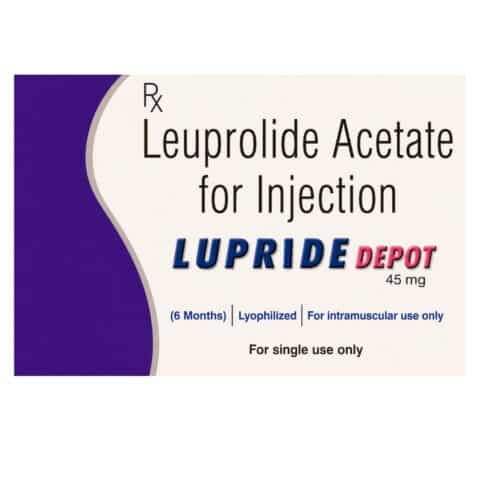
| Generic Name | Leuprolide Acetate 45 mg |
| Drug Class | GnRH Agonist |
| Brand Reference | Lupron Depot 45 mg (USA), Eligard 45 mg (USA/EU/UK), Lucrin Depot (International) |
| Primary Indication | Advanced Prostate Cancer — Long-Term Androgen Deprivation Therapy (ADT) |
| Additional Uses | Central Precocious Puberty (under specialist supervision) |
| Dose / Frequency | One injection every 6 months (24 weeks) |
| Dosage Form | Depot injection (lyophilized microspheres / Atrigel polymer system) |
| Route | Intramuscular (Lupron Depot) or Subcutaneous (Eligard) |
| Prescription Required | Yes |
| Regulatory Status | FDA-approved for advanced prostate cancer |
Leuprolide Acetate 45 mg is a six-month depot injection used for the long-term treatment of advanced prostate cancer through androgen deprivation therapy (ADT). It is the generic equivalent of Lupron Depot 45 mg (USA) and corresponds to Eligard 45 mg, which is widely used in both the USA and across Europe including the UK. A single injection suppresses testosterone to castrate levels for a full 24 weeks — making it the longest-acting leuprolide acetate depot formulation available.
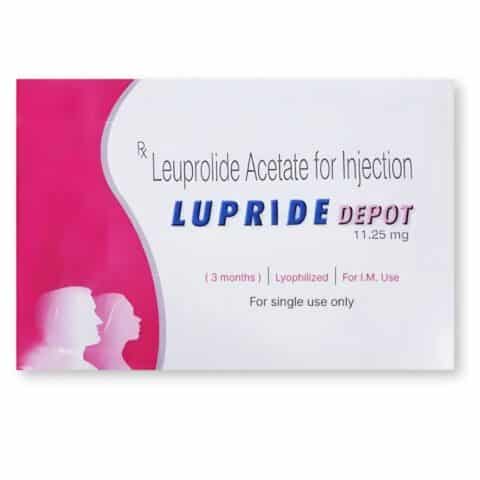
The 45 mg strength is used exclusively in the management of advanced prostate cancer and differs from the 11.25 mg and 22.5 mg strengths used for endometriosis, fibroids, and other hormone-sensitive conditions. Only two injections per year are required, which significantly reduces clinic visits for patients on long-term androgen deprivation therapy.
Leuprolide Acetate 45 mg is indicated for advanced prostate cancer, including locally advanced, metastatic, and castration-resistant disease. It is used as monotherapy or in combination with oral antiandrogens such as bicalutamide, enzalutamide, or apalutamide for combined androgen blockade. It is also used as adjuvant therapy alongside radiotherapy in high-risk localised prostate cancer, and as neoadjuvant treatment before radiotherapy to reduce tumour volume.
Clinical evidence shows that the 6-month depot delivers testosterone suppression equivalent to the 3-month formulation, with PSA reductions of up to 96% and testosterone reductions of up to 90% observed at 12 months in real-world studies.
Leuprolide acetate is a synthetic GnRH agonist. Following injection, it causes an initial brief surge in LH, FSH, and testosterone — known as a testosterone flare — which lasts approximately one to two weeks. This is followed by sustained downregulation of GnRH receptors in the pituitary gland, leading to a significant and maintained drop in testosterone to castrate levels (below 50 ng/dL) within two to four weeks. The Atrigel polymer system used in Eligard, or the microsphere formulation in Lupron Depot, allows controlled release of leuprolide acetate over the full six-month period with no additional injections required.
The primary advantage of the 45 mg 6-month formulation is convenience — only two clinic visits per year for injection, compared to four with the 3-month depot or twelve with monthly formulations. This reduces patient burden, improves adherence, and lowers the overall cost of long-term ADT management. Clinical studies and real-world data confirm that the 6-month depot maintains reliable testosterone suppression throughout the dosing interval, with an efficacy and safety profile comparable to shorter-acting formulations.
Leuprolide Acetate 45 mg is used to treat advanced prostate cancer through long-term androgen deprivation therapy. It suppresses testosterone production to castrate levels for six months per injection. It is used in locally advanced, metastatic, and castration-resistant prostate cancer, often alongside oral antiandrogen medicines.
Yes. Leuprolide Acetate 45 mg is the generic equivalent of Lupron Depot 45 mg by AbbVie (USA). Eligard 45 mg (Astellas) is a widely used branded alternative that contains the same active ingredient delivered via a subcutaneous polymer injection system. Both are approved for advanced prostate cancer and given every six months.
Once every 24 weeks — that is, two injections per year. It is administered by a healthcare professional either as an intramuscular injection (Lupron Depot formulation) or as a subcutaneous injection (Eligard formulation). The six-month interval makes it the most convenient depot leuprolide formulation for long-term prostate cancer ADT.
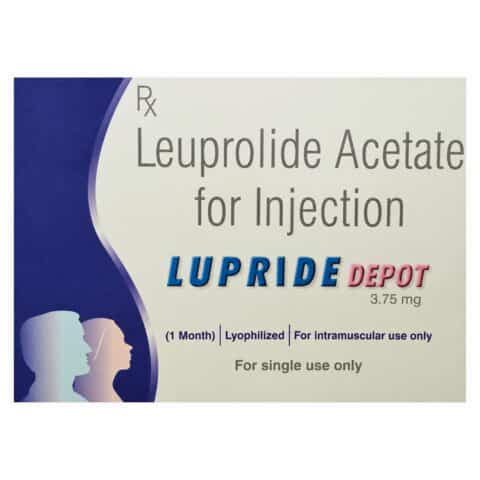
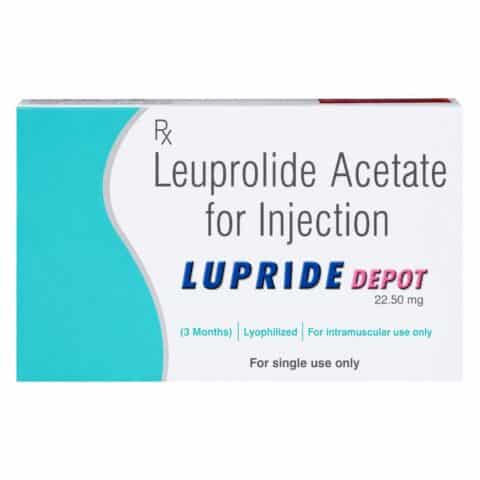
Both contain leuprolide acetate and work through the same mechanism. The 22.5 mg formulation is a 3-month depot given every 12 weeks. The 45 mg formulation is a 6-month depot given every 24 weeks. The 45 mg dose is used exclusively for prostate cancer; the 22.5 mg dose is also used for prostate cancer but covers a shorter dosing interval. Neither strength is interchangeable with the 11.25 mg dose used for endometriosis and fibroids.
Both contain leuprolide acetate 45 mg and are given every six months for advanced prostate cancer. Lupron Depot uses a microsphere suspension given as an intramuscular injection. Eligard uses the Atrigel polymer delivery system given subcutaneously. Clinical outcomes in terms of testosterone suppression and PSA reduction are comparable. Choice depends on prescriber preference, route of administration, and local formulary.
Yes. Eligard 45 mg (Astellas, EU/UK) is the most widely used 6-month leuprolide formulation in the UK and Europe. It is approved for advanced prostate cancer and is available through NHS and private prescribing. There is no 6-month Prostap formulation — Prostap (Takeda, UK) is available only in 1-month and 3-month depot strengths.
Common side effects include hot flushes, night sweats, fatigue, reduced libido, erectile dysfunction, and injection site reactions. With long-term use, bone density loss, weight gain, anaemia, and metabolic changes including elevated blood glucose and lipids may occur. Patients on long-term ADT are typically monitored with regular testosterone, PSA, DEXA, and metabolic panel assessments. Bone-protective treatment with a bisphosphonate or denosumab may be prescribed where indicated.
Both are GnRH agonists with similar mechanisms and comparable prostate cancer outcomes. Goserelin (Zoladex) is available as a 1-month or 3-month subcutaneous implant but does not have a 6-month formulation. Leuprolide 45 mg offers a longer dosing interval, which may be preferable for patients requiring long-term ADT with minimal clinic visits.
Yes. Leuprolide 45 mg is frequently used alongside oral antiandrogens — including bicalutamide, enzalutamide, darolutamide, or apalutamide — as part of combined androgen blockade. It is also used with radiotherapy in high-risk localised prostate cancer and as part of chemohormonal therapy with docetaxel in metastatic hormone-sensitive disease.
Yes. A short course of an antiandrogen such as bicalutamide is often prescribed for one to two weeks before and after the first leuprolide injection to block the initial testosterone flare. This is particularly important in patients with metastatic disease or significant tumour burden, where a testosterone surge could worsen symptoms.
This content is for general reference only and does not constitute medical advice. Leuprolide Acetate is a prescription-only medicine. Always consult a qualified healthcare professional before starting, stopping, or changing any medication.
Reviewed by a Licensed Pharmacist | Content reviewed: 2025
Orders ship from our India Head Office within 1–2 business days of confirmation. We include full customs documentation — HS codes, certificates of origin, and pharmaceutical export permits.
Estimated delivery: 3–7 business days to UK. 7–10 business days to UAE, Saudi Arabia and Gulf countries. 10–15 days for USA and Asian countries.
All packages arrive in plain, unmarked brown boxes. No pharmacy name or medication details on the outside.
Only logged in customers who have purchased this product may leave a review.


Reviews
There are no reviews yet.