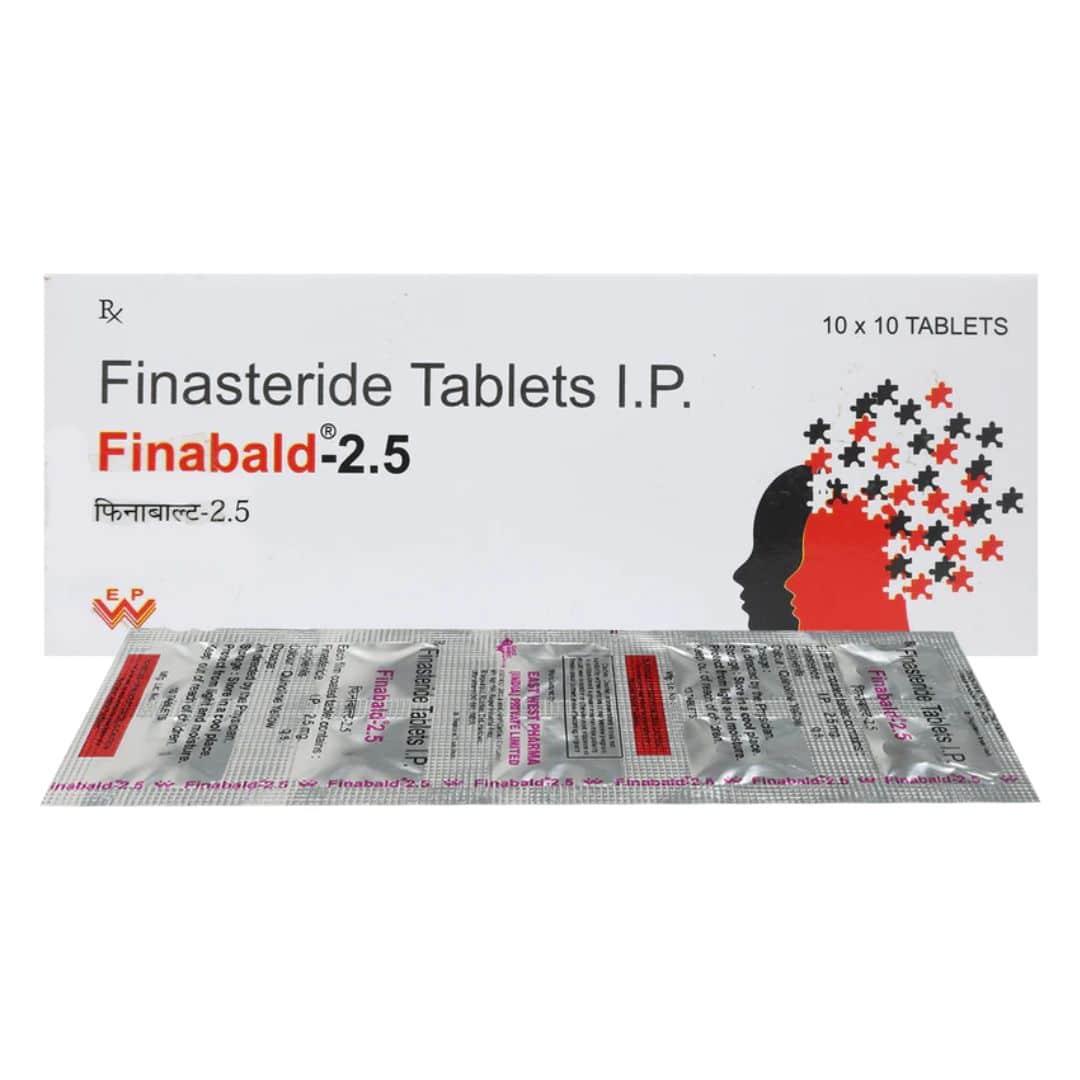
Last updated: June 16, 2026. Reviewed by Dr. James Harrington, MD.
Finasteride 2.5mg is an oral tablet containing Finasteride, a selective inhibitor of Type II 5-alpha reductase — the enzyme responsible for converting testosterone into dihydrotestosterone (DHT). DHT is the primary androgen responsible for miniaturizing hair follicles in genetically susceptible men and driving prostate tissue growth. By blocking DHT production at the source, Finasteride 2.5mg addresses both scalp hair loss and prostate enlargement through a single, well-established mechanism.
Finasteride 2.5mg is a mid-range dose between the standard 1mg hair loss dose (Propecia) and the 5mg prostate dose (Proscar), making it a clinically flexible option prescribed by physicians for individualized treatment protocols.
Finasteride 2.5mg is prescribed for men experiencing progressive hair thinning and recession caused by DHT-driven follicle miniaturization. By reducing scalp DHT levels by up to 70%, Finasteride halts further hair loss and promotes regrowth in the vertex and mid-scalp areas. Clinical studies show significant improvement in hair count and density within 6 to 12 months of consistent use.
Finasteride inhibits the growth of prostate tissue driven by DHT. In men with BPH, it reduces prostate volume, improves urinary flow, and relieves lower urinary tract symptoms including frequency, urgency, and incomplete bladder emptying. Results are typically seen after 3 to 6 months of treatment.
Finasteride 2.5mg is used off-label as an anti-androgen component in feminizing hormone therapy for transgender women, reducing DHT levels as part of a broader supervised endocrinology protocol.
Under specialist supervision, Finasteride is occasionally prescribed off-label to postmenopausal women experiencing androgenetic alopecia. It is strictly contraindicated in women of childbearing potential due to the risk of fetal harm.
Finasteride selectively inhibits Type II 5-alpha reductase, the enzyme concentrated in hair follicles, the prostate, liver, and skin. This inhibition reduces serum and scalp DHT levels by approximately 60 to 70% within 24 hours of the first dose. Lower DHT levels allow miniaturized hair follicles to recover their growth cycle and prevent further prostate tissue proliferation. Finasteride does not affect testosterone levels directly, meaning muscle mass, energy, and libido are generally preserved at standard therapeutic doses.
| Parameter | Details |
|---|---|
| Strength | 2.5mg per tablet |
| Hair Loss Dose | 1mg to 2.5mg once daily as directed by physician |
| BPH Dose | 2.5mg to 5mg once daily as directed by physician |
| Route | Oral |
| Duration | Ongoing — effects reverse within 6 to 12 months of stopping |
| Administration | Same time each day, with or without food |
| Missed Dose | Take as soon as remembered unless next dose is due — do not double dose |
Finasteride must be taken consistently every day to maintain DHT suppression. Missing doses will allow DHT levels to recover, reducing efficacy. Hair loss benefits are lost within 6 to 12 months of discontinuation. Your physician will determine the optimal dose based on your clinical presentation and response.
Medical disclaimer: All dosage decisions must be made by a licensed healthcare provider. Do not self-prescribe or adjust your dose without medical supervision.
| Component | Detail |
|---|---|
| Active Ingredient | Finasteride USP 2.5mg |
| Form | Oral Tablet |
| Excipients | Microcrystalline cellulose, lactose monohydrate, magnesium stearate, pregelatinized starch, docusate sodium, hydroxypropyl cellulose, titanium dioxide |
Finasteride is well tolerated by the majority of men. Reported side effects occur in a minority of users and include decreased libido, erectile dysfunction, reduced ejaculate volume, and breast tenderness or mild enlargement (gynecomastia). Most side effects resolve upon discontinuation of the medication.
A subset of men report persistent sexual, neurological, and psychological symptoms following discontinuation of Finasteride — a condition referred to as Post-Finasteride Syndrome (PFS). While not yet fully characterized in clinical literature, this should be discussed with your prescribing physician before starting treatment.
Finasteride 2.5mg must not be used by:
No clinically significant drug interactions have been identified with Finasteride at therapeutic doses. However, inform your physician of all medications including alpha-blockers used for BPH, as combination therapy requires monitoring. Finasteride reduces PSA levels by approximately 50% — inform any physician ordering PSA tests that you are taking Finasteride to ensure accurate interpretation.
USA: Discreet tracked shipping nationwide. Standard 3 to 5 days and express 1 to 2 day options available.
UK: Royal Mail tracked delivery. Next-day express available on orders placed before 2pm.
Packaging: Plain, unmarked outer packaging with no medical or product branding visible.
Dispatch: All orders dispatched within 24 to 48 hours of order confirmation.
Temperature: Stored and shipped at controlled room temperature as per pharmaceutical standards.
The information on this page is for educational purposes only and does not constitute medical advice. Finasteride 2.5mg is a prescription-only medicine in the USA and UK. It must be prescribed by a licensed physician following a clinical assessment. Women who are pregnant or may become pregnant must not handle crushed or broken Finasteride tablets. Always consult your doctor before starting, stopping, or changing any medication.
Content last reviewed: June 16, 2026 by Dr. James Harrington, MD.
Finasteride 2.5mg is used for the treatment of male pattern hair loss (androgenetic alopecia) and benign prostatic hyperplasia (BPH). It works by blocking the enzyme that converts testosterone to DHT — the hormone responsible for both hair follicle miniaturization and prostate enlargement. The 2.5mg dose is a physician-prescribed mid-range option between the standard 1mg hair loss dose and the 5mg prostate dose.
Yes. Finasteride 2.5mg delivers a higher dose of the active ingredient than the standard 1mg (Propecia) hair loss tablet. Some physicians prescribe 2.5mg for men who have not achieved adequate DHT suppression on 1mg, or for those requiring a dose between the 1mg and 5mg formulations for combined hair and prostate management.
Most men notice that hair loss has stopped within 3 to 6 months of starting Finasteride 2.5mg. Visible regrowth typically begins at 6 months and continues improving up to 12 to 24 months with consistent daily use. Finasteride must be taken indefinitely to maintain results — hair loss resumes within 6 to 12 months of stopping.
The majority of side effects associated with Finasteride resolve after stopping the medication. However, a small number of men report persistent symptoms after discontinuation — referred to as Post-Finasteride Syndrome. The clinical prevalence and mechanism of PFS are still being studied. This risk should be discussed openly with your prescribing physician before starting treatment.
Finasteride does not directly reduce testosterone. It blocks the conversion of testosterone to DHT, meaning testosterone levels are maintained or may even rise slightly. At standard therapeutic doses, most men retain normal energy levels, muscle mass, and the majority of libido function.
Yes. Finasteride addresses both conditions through the same DHT-suppression mechanism. Many physicians prescribe a single daily dose to manage both androgenetic alopecia and early to moderate BPH simultaneously, making it a cost-effective and convenient dual-purpose treatment.
Finasteride is a prescription-only medicine in the USA. It can be legally dispensed online through licensed telehealth platforms and registered online pharmacies that verify a valid prescription from a US-licensed physician. It cannot be legally purchased without a prescription in the United States.
Yes, with a valid prescription. MHRA-registered online pharmacies in the UK can legally dispense Finasteride 2.5mg following an online consultation with a registered prescriber. The 1mg dose is available through some UK pharmacies following an online assessment, but 2.5mg typically requires a specific physician prescription.
Generic Finasteride 2.5mg typically costs between $20 and $50 per month in the USA depending on the pharmacy and insurance coverage. In the UK, private prescriptions for Finasteride 2.5mg range from approximately £15 to £35 per month. It is significantly cheaper than branded alternatives such as Propecia. Telehealth subscription services in the USA often bundle the prescription and medication from $25 to $40 per month.
Finasteride is marketed as Propecia at 1mg for hair loss and Proscar at 5mg for BPH, both originally developed by Merck. The 2.5mg strength is a generic formulation not associated with a specific brand name, prescribed by physicians requiring a dose between these two standard strengths.
Yes. Generic Finasteride contains the identical active ingredient at equivalent bioavailability. Regulatory approval of generic medicines in both the USA (FDA) and UK (MHRA) requires demonstration of bioequivalence to the branded product. Generic Finasteride delivers the same clinical outcomes at a significantly lower cost.
Erectile dysfunction is a reported side effect in a small percentage of men taking Finasteride — clinical trials report incidence of approximately 1 to 4%. The majority of affected men find that erectile function returns to baseline after stopping the medication. If erectile dysfunction develops during Finasteride use, inform your prescribing physician promptly.
Depression and mood changes have been reported by some men taking Finasteride. The FDA updated Finasteride labeling to include depression and suicidal ideation as potential risks. Men with a history of depression or mood disorders should discuss this risk carefully with their physician before starting Finasteride. If depression develops during treatment, seek medical attention immediately.
Yes. Finasteride and minoxidil are commonly prescribed together for male pattern hair loss. They work through different mechanisms — Finasteride reduces DHT and minoxidil increases blood flow to follicles — making them complementary. Most hair loss specialists consider combination therapy more effective than either treatment alone.
No. Pregnant women or women who may become pregnant must not handle crushed or broken Finasteride tablets. Finasteride is absorbed through the skin and can cause abnormalities in the development of male fetal genitalia. Whole intact tablets pose no risk if contact is avoided, but any exposure should be reported to a physician immediately.
Yes. Finasteride reduces PSA (Prostate-Specific Antigen) levels by approximately 50% after 6 months of use. This must be communicated to any physician ordering PSA tests, as failure to account for this reduction can lead to underestimation of PSA values and potentially delayed detection of prostate cancer. Your physician will typically double the PSA reading to account for Finasteride’s effect.
Moderate alcohol consumption is not known to interact significantly with Finasteride. However, heavy alcohol use can independently affect sexual function and liver metabolism, which may compound side effects. Responsible alcohol consumption is advised during any prescription medication course.
Yes, for hair loss maintenance. Finasteride only works while it is being taken. DHT levels return to baseline within 1 to 2 weeks of stopping and hair loss resumes within 6 to 12 months of discontinuation. Men who respond well to Finasteride are typically maintained on it long-term under annual physician review.
Tablet splitting is sometimes done under physician guidance to achieve intermediate doses, but it is not recommended without medical supervision as it may affect dose accuracy and tablet integrity. Your physician or pharmacist should advise on the correct splitting technique if a lower dose is required.
If you miss a dose, take it as soon as you remember on the same day. If you only remember the following day, skip the missed dose and continue with your regular schedule. Do not take a double dose to compensate. Missing occasional doses will cause a brief recovery of DHT levels but will not permanently reduce the effectiveness of the treatment.
Orders ship from our India Head Office within 1–2 business days of confirmation. We include full customs documentation — HS codes, certificates of origin, and pharmaceutical export permits.
Estimated delivery: 3–7 business days to UK. 7–10 business days to UAE, Saudi Arabia and Gulf countries. 10–15 days for USA and Asian countries.
All packages arrive in plain, unmarked brown boxes. No pharmacy name or medication details on the outside.
Only logged in customers who have purchased this product may leave a review.


Reviews
There are no reviews yet.