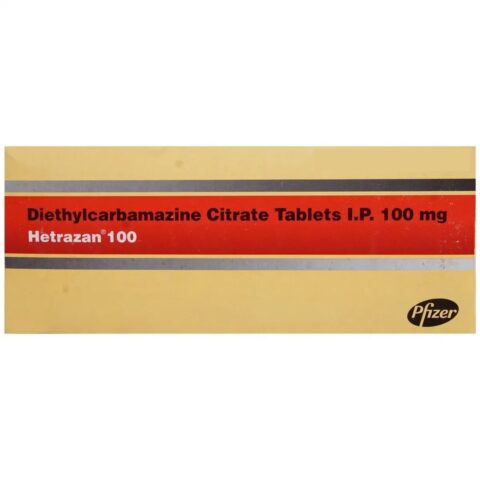
Drug Name: Diethylcarbamazine Citrate (DEC) | Drug Class: Antifilarial Agent | Brand Reference: Hetrazan (Wyeth); Banocide Forte (GSK India) | Indication: Lymphatic filariasis (elephantiasis), loiasis, tropical pulmonary eosinophilia (TPE) | Standard Dose: Lymphatic filariasis: 6mg/kg/day in divided doses × 12 days. MDA: single annual dose 6mg/kg
Diethylcarbamazine (DEC) 100mg is an antifilarial medication used as WHO first-line treatment for lymphatic filariasis (the parasitic infection causing elephantiasis), loiasis (eye worm), and tropical pulmonary eosinophilia. The 100mg tablet allows precise dose titration based on body weight — standard dosing is 6mg/kg/day over 12 days. DEC has been used in WHO mass drug administration (MDA) elimination programmes since 1947.
Diethylcarbamazine 100mg contains Diethylcarbamazine Citrate (DEC), a antifilarial agent. It is indicated for lymphatic filariasis (elephantiasis), loiasis, tropical pulmonary eosinophilia (tpe). WHO first-line for lymphatic filariasis elimination programme; used in global MDA since 1947.
| Attribute | Details |
|---|---|
| Generic Name | Diethylcarbamazine Citrate (DEC) |
| Drug Class | Antifilarial Agent |
| Brand Reference | Hetrazan (Wyeth); Banocide Forte (GSK India) |
| Primary Indication | Lymphatic filariasis (elephantiasis), loiasis, tropical pulmonary eosinophilia (TPE) |
| Standard Dose | Lymphatic filariasis: 6mg/kg/day in divided doses × 12 days. MDA: single annual dose 6mg/kg |
| Dosage Form | Tablet |
| Route of Administration | Oral |
| Prescription Required | Yes |
| Evidence Base | WHO first-line for lymphatic filariasis elimination programme; used in global MDA since 1947 |
Immobilises microfilariae and alters their surface to enable immune clearance; also directly filaricidal. This mechanism of action makes Diethylcarbamazine Citrate (DEC) effective against lymphatic filariasis (elephantiasis), loiasis, tropical pulmonary eosinophilia (tpe).
Diethylcarbamazine (DEC) treats filarial parasitic infections — specifically lymphatic filariasis (Wuchereria bancrofti and Brugia species), loiasis (Loa loa eye worm), and tropical pulmonary eosinophilia. It is not effective against intestinal worms; albendazole or mebendazole are used for those.
For lymphatic filariasis, the dose is 6mg/kg/day divided into 3 doses for 12 days. In WHO mass drug administration programmes, a single annual dose of 6mg/kg is given. Dosing starts low (1mg/kg day 1, 2mg/kg day 2) and escalates to the full dose to minimise allergic reactions from dying parasites.
Most side effects from DEC are caused by the immune reaction to dying parasites (Mazzotti reaction), not the drug itself: fever, headache, myalgia, rash, and temporary worsening of lymphoedema. Direct drug side effects include nausea, dizziness, and abdominal discomfort. Caution is required in loiasis with high microfilarial loads due to risk of encephalopathy.
No — both treat filarial infections but work differently and have different indications. DEC is the primary drug for lymphatic filariasis and loiasis; ivermectin is used for onchocerciasis and as a second-line option for lymphatic filariasis. In WHO mass drug administration, DEC + albendazole is the standard combination used in countries without onchocerciasis.
DEC is generally avoided during the first trimester of pregnancy. WHO guidance on mass drug administration excludes pregnant women and children under 2 years from DEC administration. Individual treatment decisions should be made by a physician weighing the risk of untreated filariasis against potential foetal risk.
Store at room temperature (15–30°C) away from direct sunlight, heat, and moisture. Keep out of reach of children and pets. Do not use after the expiry date printed on the packaging.
Orders ship from our India Head Office within 1–2 business days of confirmation. We include full customs documentation — HS codes, certificates of origin, and pharmaceutical export permits.
Estimated delivery: 3–7 business days to UK. 7–10 business days to UAE, Saudi Arabia and Gulf countries. 10–15 days for USA and Asian countries.
All packages arrive in plain, unmarked brown boxes. No pharmacy name or medication details on the outside.
Only logged in customers who have purchased this product may leave a review.

Reviews
There are no reviews yet.